Ashden Award for Powering Refugees and Displaced People
Smoke from open cooking fires and polluting stoves kills millions of people every year. Refugees are among those in greatest danger. But in Kenya’s Kakuma Refugee camp, residents are manufacturing a homegrown solution.
Locally made cooking stoves from USAFI Green Energy protect people’s health, create jobs, and even help deal with invasive prosopis trees that dry out local land and harm cattle. Now communities can turn the nuisance plant into a useful fuel.
Household air pollution, mostly from cooking smoke, is linked to around 2.5 million premature deaths a year. Women and girls are most likely to face to the burden of cooking, and so are at greatest risk. Refugees are particularly likely to face energy poverty, and lack access to clean and modern stoves.
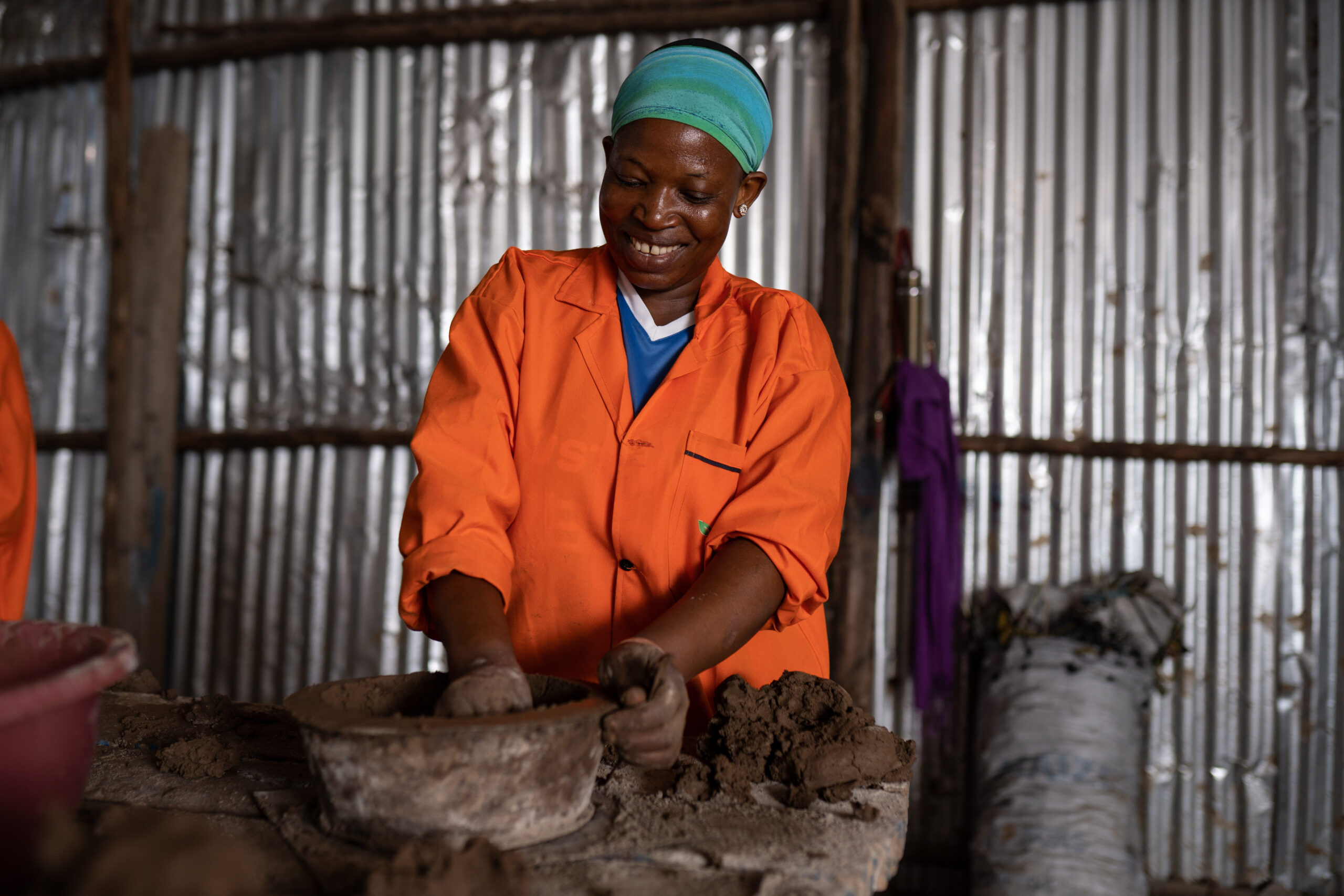
USAFI Green Energy was only founded in 2021, but already produces more than 100 of its affordable, efficient ‘Silver Bora’ brand cookstoves a day at its Kakuma factory. These are sold through a network of retailers across the camp.
As well as making cooking faster and safer, the stoves cut the amount of time users spend gathering firewood – another task that normally falls on women and girls. The company makes stoves for homes but also larger devices for schools and hospitals.
The stoves can be fueled by wood, but can also use clean burning briquettes, also made at the camp, formed from compressed plants. The briquette ingredients include prosopis, an invasive tree species that dominates local vegetation, shrinks grasslands and is a danger to people and livestock – it sucks water from the ground, while cattle are scratched by its thorns and can be poisoned by its seed pods.
USAFI Green Energy replants the areas where it chops down the prosopis with more beneficial mwarubaini trees. It grows seedling which are given to the community for free – more than 2,000 have been handed out so far.
No comments for this post, be the first to comment.
Comment